The smell starts in the floor
You notice it when you open a closet or step into a back bedroom. A damp, earthy smell that comes and goes with the weather. In a lot of Franklin homes that odor is not coming from the room itself. It rises up through the floor from the crawl space, carried on humid air that moves from the ground into the living space all day long.
Many older houses around here sit on wood posts over bare dirt, with open foundation vents on every side. The idea was that outdoor air would keep the space dry. In the Upper Cumberland, with our wet summers and limestone soil that holds water, those vents do the opposite. Warm outside air drifts in, hits the cool crawl space, and drops its moisture on the framing. That is the start of musty air, cupped flooring, and that soft spot in the hallway.
Why vented crawl spaces stay wet here
The ground under Franklin and the towns nearby is karst limestone with clay on top. Clay swells when it is wet and shrinks when it dries, so the soil is always moving a little through the seasons. Water finds the cracks, moves sideways under the house, and the dirt floor of the crawl space stays damp far longer than you would think.
Add in open vents and you have a steady supply of humid air. Wood posts and old girders sit in that air year after year. The moisture content of the framing climbs, mold has something to live on, and the floor loses stiffness. Bouncy floors are often two problems stacked together: too much moisture and not enough support underneath.
What encapsulation actually involves
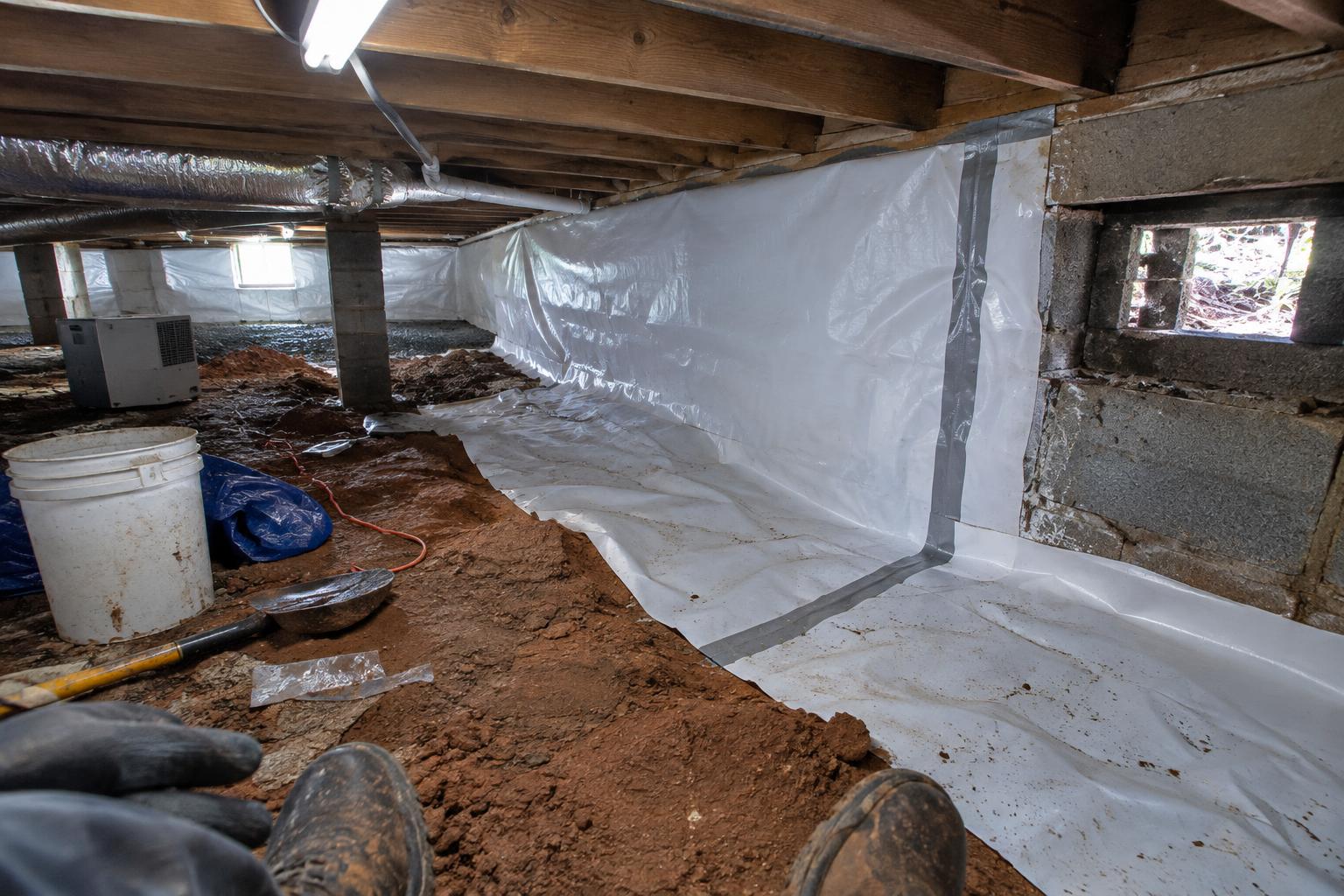
Crawl space encapsulation in Franklin means we close the space off from the ground and the outside air, then control what is left. It is a sequence, and each step matters.
First we clean out the space. Old debris, fallen insulation, and any standing water come out. If water is pushing in, we set up drainage and a sump so it has somewhere to go instead of sitting on the soil.
Next we seal the floor and walls. A heavy vapor barrier goes down over the dirt, runs up the foundation walls, and gets sealed at the seams and the piers. The old foundation vents get closed. At that point the ground can no longer feed moisture into the air under your house.
Then we manage humidity. A crawl space dehumidifier keeps the sealed space at a steady level so the wood stays dry through the summer. We check the framing, the band joist, and the posts while we are under there, because that is the time to catch a problem.
When the floor needs more than a dry crawl space
Sealing the air fixes the smell and protects the wood going forward. It does not lift a floor that has already started to sag. If your posts have settled, if a girder has softened, or if the original spacing was never enough, the floor needs real support added back.
That is where Structural Floor Support comes in. We set adjustable steel posts on proper footings, carry the load across new or reinforced beams, and bring the floor back to a stable, level plane. Done together with encapsulation, you get a dry space and a solid floor in one project, instead of coming back to the same bounce a year later.
What changes after the work
The first thing most homeowners notice is the air. The musty smell fades because the ground is no longer feeding humidity upstairs. The floor feels firmer underfoot, especially where we added support. In summer the whole house tends to feel less sticky, and your HVAC does not have to fight damp air coming up from below.
There is a maintenance side too, and it is light. A sealed crawl space is easy to walk through and inspect. If a plumbing line ever leaks, you see it fast on the clean liner instead of finding it months later in soaked soil. We walk you through what to keep an eye on before we leave.
FAQ
If you are in Franklin or nearby and the air in your house keeps smelling damp, the crawl space is the first place worth checking. Call DrySpace at 931-650-5859 to set up an inspection.
Frequently asked questions
How long does crawl space encapsulation take?
Most Franklin homes take two to four days, depending on the size of the space, how much cleanup is needed, and whether any drainage or structural support goes in at the same time. We give you a clear timeline after we inspect.
Will encapsulation get rid of the musty smell in my house?
In most cases yes. The smell usually comes from humid crawl space air rising through the floor. Once we seal the ground, close the vents, and control the humidity, that source is cut off and the air upstairs clears over the following weeks.
Do I still need a dehumidifier after the crawl space is sealed?
Usually yes. Sealing stops moisture from the ground, but a crawl space dehumidifier keeps the space at a steady level through our humid summers. It runs quietly and protects the wood framing year round.