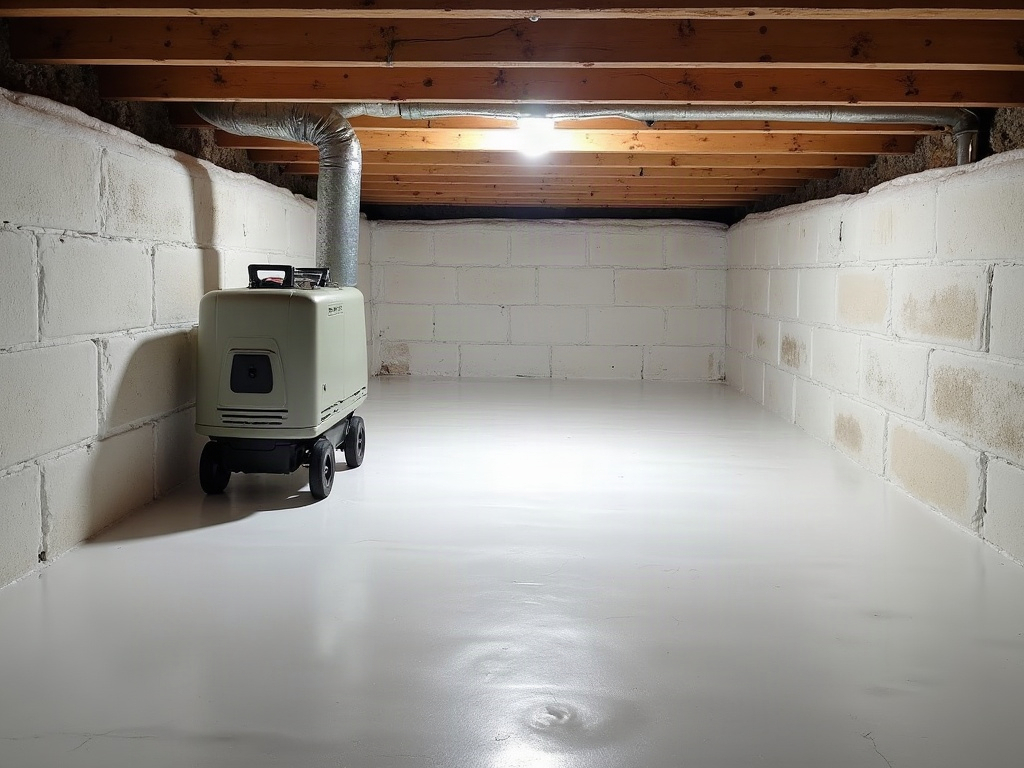
If you live in Sparta, you probably already know the smell. You open a closet or walk across the living room on a humid July afternoon, and there it is. A musty, earthy odor that seems to come from nowhere. Most of the time it is coming from under your feet. The crawl space below the house is doing exactly what an old vented crawl space tends to do here in the Upper Cumberland. It is pulling in warm, wet outside air and holding onto it.
That trapped moisture is the root of a lot of problems homeowners call us about. Soft floors that give a little when you step. A damp basement-like chill in one room. Wood that stays cool and clammy to the touch. None of it is random. It traces back to the ground, the air, and the way homes around Sparta were built.
Why Sparta Crawl Spaces Stay Wet
This part of Tennessee sits on limestone and karst. Water moves through the ground in ways you cannot always see, and the clay soil swells when it rains and shrinks when it dries. That wet-dry cycle works on your foundation and footings year after year. The soil under a crawl space is rarely truly dry, and bare dirt gives off moisture constantly.
Then there are the vents. For decades the standard practice was to put vents in the crawl space walls to let air move through. The idea sounded reasonable. In practice, on a humid Sparta summer day, those vents let in air that is heavy with moisture. That air hits the cooler surfaces under your house and condenses, the same way a glass of iced tea sweats on the porch. So the vents that were supposed to dry things out often make the space wetter.
Many older homes here also rest on wood posts set into the ground. Over time those posts can soak up moisture, settle, or rot at the base. That is where the bounce in your floors usually starts.
What Encapsulation Actually Does
Crawl space encapsulation in Sparta means sealing the space off from the ground and the outside air. We cover the dirt floor and run a heavy liner up the foundation walls, creating a clean, continuous barrier. The vents get sealed. A proper drainage path and often a dehumidifier keep the space at a steady, controlled moisture level.
Think of it as wrapping the underside of your home in a protective layer. Once the ground moisture can no longer evaporate up into the space, and once the humid summer air is locked out, the whole environment changes. The wood stays dry. The musty smell fades because there is no longer a damp dirt floor feeding it. And the air your house pulls up from below becomes clean instead of swampy.
A real encapsulation is more than a sheet of plastic laid loosely on the ground. The seams are sealed. The liner is fastened to the walls. Penetrations around pipes and supports are handled. Done right, you can crawl under there in clean clothes and come out clean.
The Connection to Your Floors
Here is the part a lot of homeowners miss. The moisture problem and the soft floor problem are usually the same problem. When wood framing and support posts sit in a damp crawl space for years, they lose strength. The posts settle into softened soil. Beams sag a little. Floors start to feel springy.
Encapsulation stops the moisture, but it does not undo damage that is already there. If your floors already bounce or dip, that framing may need attention on its own. In many Sparta homes we address both together, pairing a sealed crawl space with Structural Floor Support to shore up the sagging areas. New adjustable supports on solid footings replace tired wood posts, and the sealed space keeps the new work dry for the long haul.
Fixing one without checking the other often leaves you halfway. A dry crawl space over failing posts still has soft floors. New supports in a wet crawl space will sit in the same damp conditions that caused the trouble the first time.
What the Work Looks Like
We start by looking at the whole space. We check the soil, the posts and beams, standing water, grading around the house, and where outside water is getting in. Sometimes a crawl space needs a drainage fix before any liner goes down. Water should have somewhere to go.
From there the process generally runs like this. Clear out debris and old torn plastic. Address any standing water or drainage issues. Repair or support framing and posts where needed. Lay and seal the liner across the floor and up the walls. Seal the vents. Set up humidity control so the space stays in a healthy range through Sparta's wet seasons.
Every house is a little different. A crawl space in a newer subdivision behaves differently than a 1950s home on original wood posts. We size the approach to what your home actually needs.
Signs It Is Time to Call
You do not have to wait for a disaster. A few things are worth a look. Floors that feel soft or uneven. A musty smell that keeps coming back. Higher humidity indoors even with the air conditioner running. Condensation on ductwork or pipes under the house. If any of that sounds familiar, the crawl space is the first place to check.
If you want a straight answer about your home, call us at 931-650-5859. We will tell you what we see and what makes sense.
A Dry Foundation Is a Steadier House
A sealed crawl space is quiet work. You do not see it every day. But you feel the difference in cleaner air, floors that hold firm, and a home that is not fighting the weather from underneath. In a region built on karst and swelling clay, keeping moisture out from below is one of the better things you can do for a Sparta home.
Frequently asked questions
How long does crawl space encapsulation take in a Sparta home?
Most homes take a few days, depending on the size of the crawl space and the condition we find. If there is standing water, drainage work, or framing repair needed first, that adds time. We give you a clear timeline after we inspect the space.
Will encapsulation get rid of the musty smell in my house?
In most cases yes. That odor usually comes from a damp dirt floor and humid air moving up into the living space. Once the ground is sealed off and humidity is controlled, the source is gone and the smell fades.
Do I still need floor support if I encapsulate?
Not always, but often. Encapsulation stops new moisture damage. If your posts or beams are already weakened and your floors feel soft, those usually need separate support work. We check both when we look at your crawl space.