If you live in Gainesboro, you probably know the feeling. You open a closet or walk across the back bedroom and the floor gives a little under your feet. The air in the house carries a faint musty smell that never fully goes away, even after you clean. Summer makes it worse. These are not random problems. They almost always trace back to what is happening under the house, in the crawl space.
Most older homes around Jackson County sit on wood posts or block piers over a dirt floor. The crawl space has vents cut into the foundation walls. The idea, years ago, was that open vents would let the space breathe and stay dry. In the Upper Cumberland, that plan works against you. Our summers are humid. When warm, moist air flows through those vents and meets the cooler surfaces under your floor, it condenses. The wood stays damp. That is where the trouble starts.
Why Gainesboro Crawl Spaces Stay Wet
The ground here is a big part of the story. This region sits on limestone and karst geology, which means water moves through the soil in ways you cannot always see. Rain soaks in, seeps sideways, and collects in low spots. The clay soils around Cookeville and Baxter make it harder. Clay swells when it gets wet and shrinks when it dries. That wet-dry cycle repeats season after season, and it pushes moisture up into the crawl space from the dirt floor below.
So you have two sources working together. Humid air coming in through the vents, and ground moisture rising from bare soil. A vented crawl space cannot keep up with either one. The relative humidity under the house climbs, and it stays high for weeks at a time. Wood that lives in that kind of air starts to soften. Mold finds a home on the joists. The smell works its way up into your living space through gaps around pipes and wiring.
What Encapsulation Actually Does
Crawl space encapsulation in Gainesboro is a way of closing the crawl space off from outside air and ground moisture. The work is straightforward once you see it done.
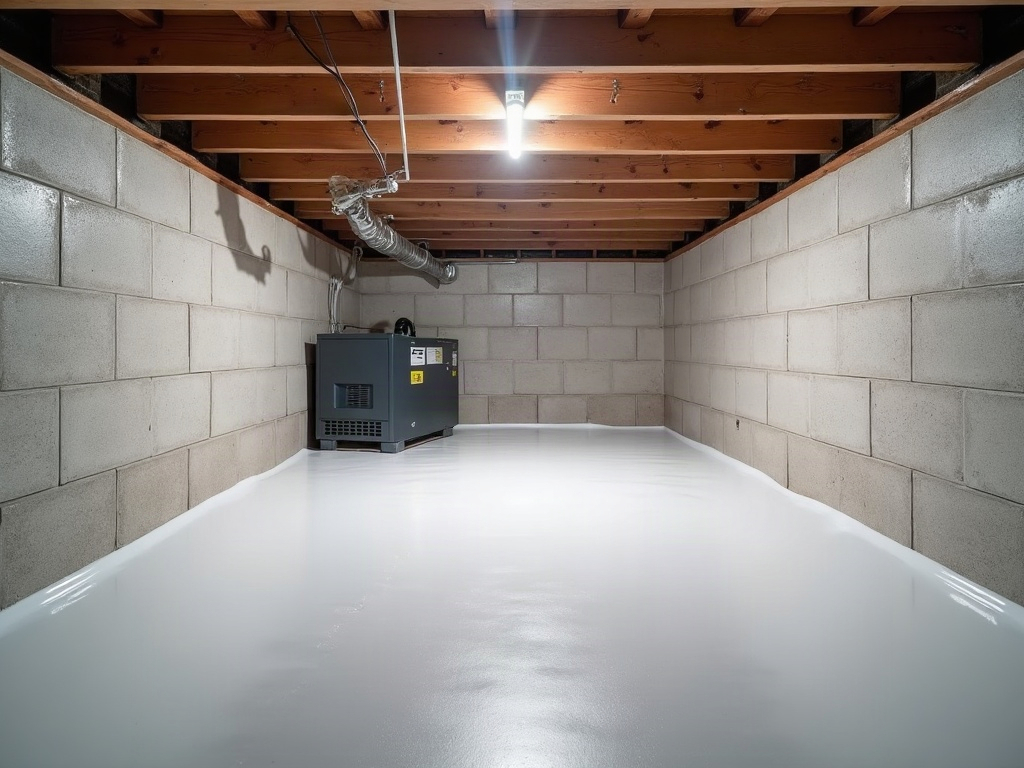
First, the crew clears out old debris and any ruined insulation hanging from the joists. Then they seal the vents so humid outdoor air stops flowing in. A heavy vapor barrier, usually a thick reinforced liner, goes down across the entire dirt floor and up the foundation walls. The seams are overlapped and sealed so moisture cannot creep through. The barrier wraps the piers too.
With the ground covered and the vents closed, the crawl space becomes part of the dry, controlled zone under your house. Many homes in this area also get a dehumidifier sized for the space, which holds the humidity at a steady level year round. If water has been pooling, a drainage system or a sump pump may go in first to carry it away before the liner is installed.
The result is a crawl space that stays dry and clean. The musty smell fades because the damp air that fed it is gone. The wood stops taking on moisture, so it can hold its strength.
The Connection to Soft, Bouncy Floors
Homeowners often ask about the bounce in their floors and assume it is separate from the moisture problem. Usually it is not. When floor joists and beams sit in a damp crawl space for years, they lose stiffness. Wood posts can settle into soft, wet soil. Shims slip. A beam that used to sit flat develops a sag, and you feel it as that soft spot in the hallway.
Encapsulation stops the moisture that caused the weakening. It does not lift a floor that has already dropped. When the framing needs more than a dry environment, Structural Floor Support adds adjustable steel posts and proper footings to carry the load and take the bounce out. The two jobs work well together. You dry the space so the wood can recover and stay sound, and you add support where the framing has already given way.
What to Expect During the Work
Most encapsulation projects in Gainesboro take a couple of days, depending on the size of the crawl space and how much water management it needs. The crew works from the crawl space access, so the disruption inside your home is minimal. You do not have to move out.
A good contractor will walk the space first and tell you what they find. Standing water, fungal growth, failing posts, gaps in the foundation. The plan should match the actual conditions under your house, not a one size fits all package. Ask questions about the thickness of the liner, how the seams are sealed, and whether a dehumidifier is included. Those details decide how well the system holds up over the years.
Is It Worth Doing
For homes in this part of Tennessee, a dry crawl space pays off in ways you notice daily. The air upstairs smells cleaner. Floors feel more solid. Energy bills often ease up because the HVAC is not fighting damp air pulled from below. And the framing that holds your house together gets to stay dry, which protects the value of the whole structure.
If you have been putting up with musty air or a floor that never feels right, the crawl space is the place to look. A quick inspection tells you what you are dealing with. Call DrySpace at 931-650-5859 and we can take a look under your Gainesboro home.
Frequently asked questions
How long does crawl space encapsulation take in a typical Gainesboro home?
Most projects run one to three days. The timeline depends on the size of the crawl space, how much old material has to come out, and whether drainage or a sump pump is needed before the liner goes down.
Will encapsulation fix my soft, bouncy floors?
Encapsulation stops the moisture that weakens floor framing, but it does not lift floors that have already settled. For sagging or bouncy floors, structural floor support with steel posts and proper footings is usually added alongside the encapsulation.
Do I need a dehumidifier after sealing the crawl space?
In the Upper Cumberland's humid climate, a sized dehumidifier is often recommended. Sealing the vents and covering the soil removes most of the moisture, and the dehumidifier holds humidity at a steady level through the summer months.