The Floor That Moves When You Walk
You feel it before you can explain it. The kitchen floor dips a little near the sink. A glass of water ripples when someone walks past. In an older Gainesboro home, you might notice a slope toward the center of a room, or a gap opening up where the baseboard meets the floor. These are not cosmetic quirks. They are signals coming up from the crawl space.
Most homes around Gainesboro and the wider Upper Cumberland sit over a crawl space, and many of the older ones were built on wood posts resting on dirt or thin concrete pads. Wood holds up fine for decades in dry conditions. The trouble here is that conditions are rarely dry. Our soils move with the seasons, and the air under the house stays humid for much of the year. Over time that combination lets support posts settle, rot, or simply lose their grip, and the floor above starts to give.
Why Local Ground and Air Work Against Wood Posts
The Upper Cumberland sits on limestone and karst geology. Water moves through that rock in ways you cannot always see from the surface, and the clay soils on top swell when wet and shrink when dry. That wet-dry cycle pushes and pulls on anything resting in the dirt. A wood post that was plumb and tight when the house was built can lean, sink into softened soil, or pull away from the beam it was carrying.
Vented crawl spaces make it worse. Those foundation vents were meant to dry the space out, but on a humid Tennessee day they pull moist air in instead. That moisture settles on the cool wood framing. Joists stay damp, posts wick water from the ground below, and you end up with the musty smell that drifts up into the house along with the sag. When a crew member crawls under a home like this, they often find a post that is barely touching the beam, or one standing in soil that turns to mud after a rain.
What Structural Floor Support Actually Involves
Fixing a bouncy floor is not about adding more wood and hoping. The goal is a stable base that does not care what the seasons do. We start with a real look under the house, mapping where the floor has dropped and finding the posts and beams that are failing to carry their load. From there the repair follows what the structure needs.
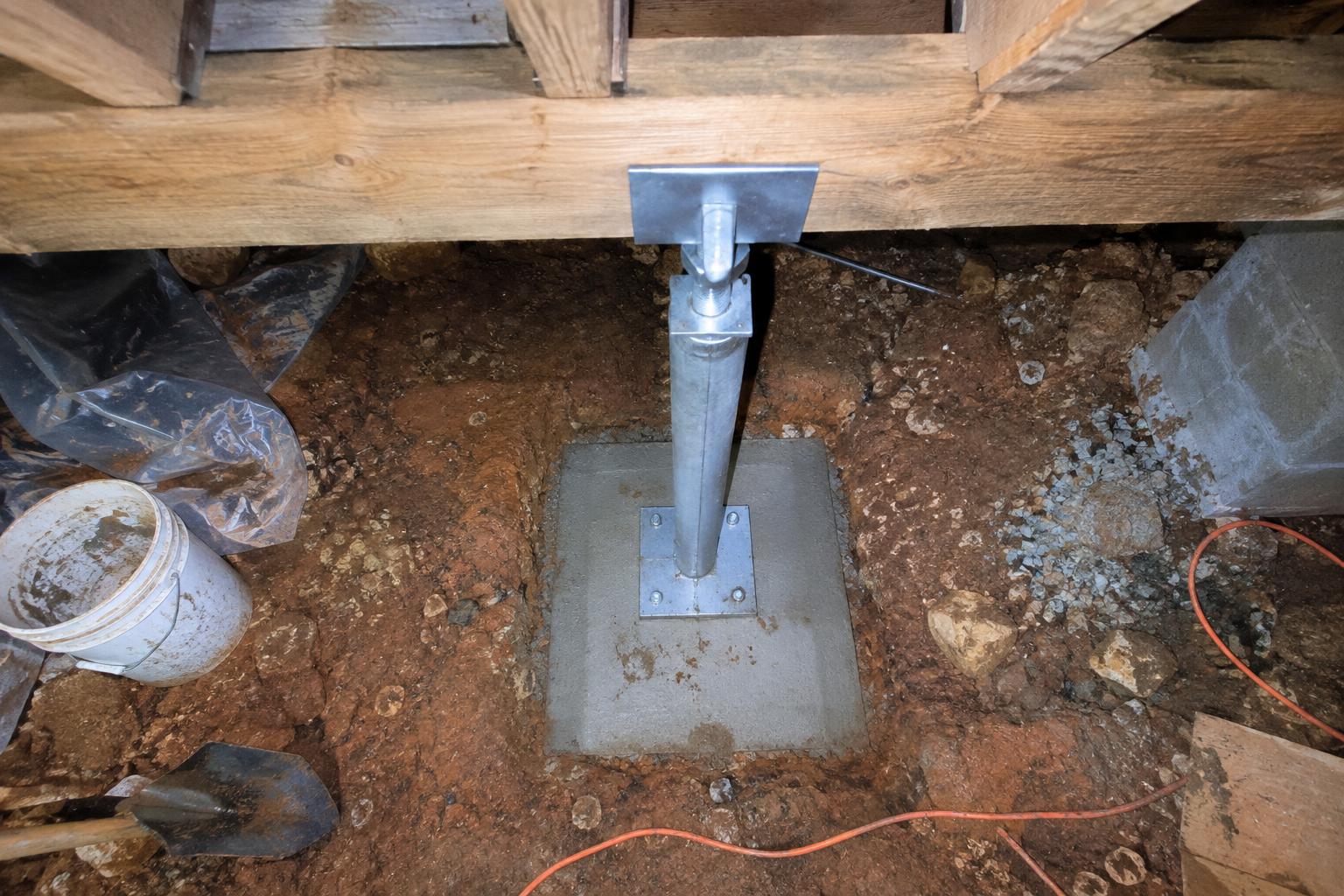
In most Gainesboro homes, that means replacing tired wood posts with adjustable steel supports set on poured concrete footings sized for the load. The footing spreads weight across the soil so the support stays put. The steel post can be adjusted to lift a sagging beam back toward level in small, controlled steps. Where joists are cracked or sagging on their own, we sister new lumber alongside them to share the load. The result is structural floor support in Gainesboro that holds firm instead of riding the wet-dry cycle.
We raise slowly on purpose. Lifting a floor too fast cracks drywall and strains door frames. Done in stages, the floor firms up, the dips shrink, and the house settles into a stable position it can keep.
Drying the Space So the Fix Lasts
New steel and fresh footings solve the load problem. They do not solve the moisture problem that caused it, and that is the part homeowners often miss. If the crawl space stays damp, you have protected the posts but left the joists and subfloor to keep soaking up humidity.
That is why we usually pair support work with sealing the space. Crawl Space Encapsulation closes off the vents, covers the dirt with a heavy vapor barrier, and uses a dehumidifier to hold the air dry year round. Once the ground moisture is capped and the outside humidity is shut out, the wood overhead finally gets to stay dry. The musty smell fades, and the wood framing stops swelling and shrinking with every weather change. Support and moisture control work together. One without the other leaves the job half done.
Signs It Is Time to Look Under Your House
You do not need to wait for a floor to feel like a trampoline. A few early signs are worth a call. Doors that stick or swing open on their own can mean the frame has shifted. Cracks in drywall above a doorway, gaps at the baseboards, and a visible slope across a room all point downward to the support below.
If you can get into the crawl space, look for posts that lean, wood that is dark and soft, or soil that stays wet long after a rain. Any of these means the floor above is losing its footing. The sooner it is addressed, the smaller and cheaper the repair tends to be. We serve Gainesboro and nearby towns including Baxter, Cookeville, Algood, Celina, and Franklin, and we are glad to take a look before small problems grow.
Frequently asked questions
How long does structural floor support work take?
Most crawl space support jobs in Gainesboro take one to three days, depending on how many posts and footings are needed and how low the headroom is. We raise the floor in stages over that time so drywall and trim are not stressed.
Will my floors become perfectly level again?
We aim to firm up the floor and recover as much of the sag as the house will safely allow. In an older home we lift gradually, and sometimes a small amount of slope remains to protect finishes. The bounce and movement go away.
Do I really need to seal the crawl space too?
It is strongly recommended. New steel posts and footings carry the load, but if the crawl space stays humid the wood framing keeps absorbing moisture. Encapsulation keeps the space dry so the repair lasts and the musty smell clears.